
Plant and Hardscape Installation by Plant Studio Landscape
A finished landscape can hide a lot. Plant rings that look right in November can show in May, when the dogwood set two inches too deep collapses in a soft soil flag. Hardscape that read level on installation day can lift a corner after the second winter because the base was poured for the climate someone else worked in. Most install failures are not visible at handoff. They are engineered in, then they show up in year three. We treat installation as the engineering layer that decides whether year three looks like year one or like a failed warranty conversation. That is the kind of install we run for homeowners across Muncie and East Central Indiana.
Plant Establishment Is the Engineering Problem the Industry Hides
Plant Studio Landscape’s Muncie install crew works to a different theory of what installation is. Most regional landscape crews price install as the day the plants land. We price it as the year and a half during which the planting is either anchoring or failing. Josh Perkins, Landscape Architect, sets the install plan from a soil profile that gets opened before the truck order goes in. Hole depth, hole width, root flare position, backfill composition, water well height, mulch ring diameter, and the first month irrigation regime are all specified per species and per site. Generic plant-by-numbers does not survive Indiana subgrade.
The result is a property that still looks like a Plant Studio Landscape install in year three, not just in week one. Trees set at the right flare height push roots out instead of girdling them. Shrubs spaced for mature size do not need a thin-out cut at year four. Perennials in beds with a corrected soil profile do not stall when the first dry July arrives. The discipline costs a half day per project in extra spec work. It saves three to five callbacks per project in years two and three.
Soil Profile, Planting-Hole Geometry, and the Year-Three Test
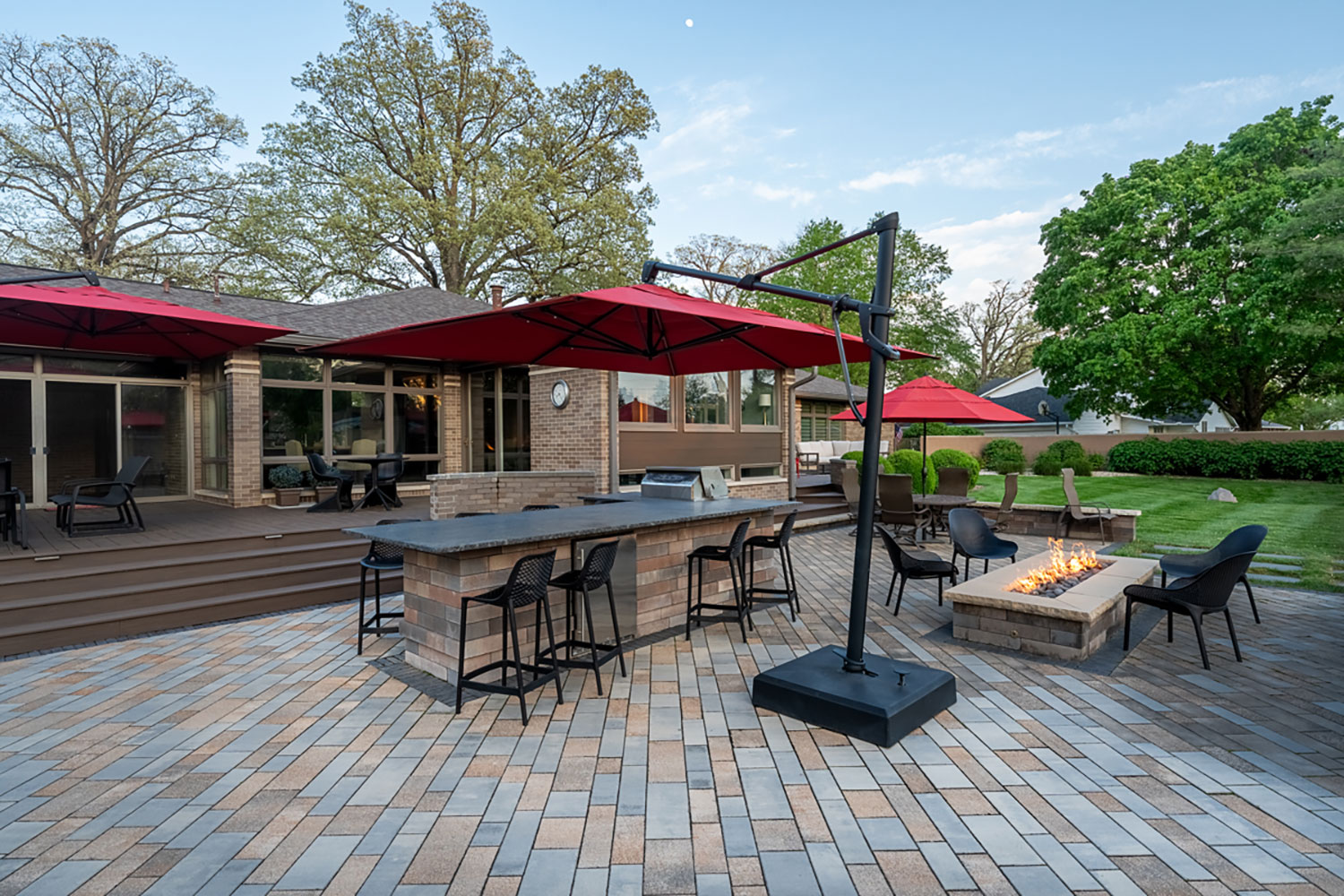
Three engineering variables decide whether a planted property holds. Soil profile is the first. The top eight to ten inches of a typical Muncie lot is whatever the builder left behind, and what is underneath can shift from heavy clay to a sand lens to a buried construction debris pocket inside a single bed. We dig test pits before the planting plan is finalized. Bed amendment is specified to what the pit shows, not to a contractor-default cubic-yard order of compost.
Planting-hole geometry is the second. Holes go twice the root-ball diameter and exactly as deep as the root flare requires. Trees set even one inch too deep in clay develop adventitious root systems, suffocate the original root mass, and start declining around year three. Trees set too shallow dry out in the first August. We mark hole depth against the root flare on every tree and every large shrub before backfill begins. Backfill is the native soil mixed with the specified amendment ratio for that bed, not a pure compost slurry that creates a bowl plants cannot escape.
Establishment irrigation is the third. The first two weeks need deep, slow water to drive roots down and out of the original ball. Frequent shallow watering trains roots to stay in the ball and produces a tree that needs irrigation for the rest of its life. We hand off a written watering schedule per zone and per planting category before the crew leaves. Sod installation work that ties into the same property follows the same establishment discipline; the lawn window and the planting window overlap, and the irrigation strategy has to account for both.
Hardscape Base Engineering for Forty Freeze-Thaw Cycles a Year
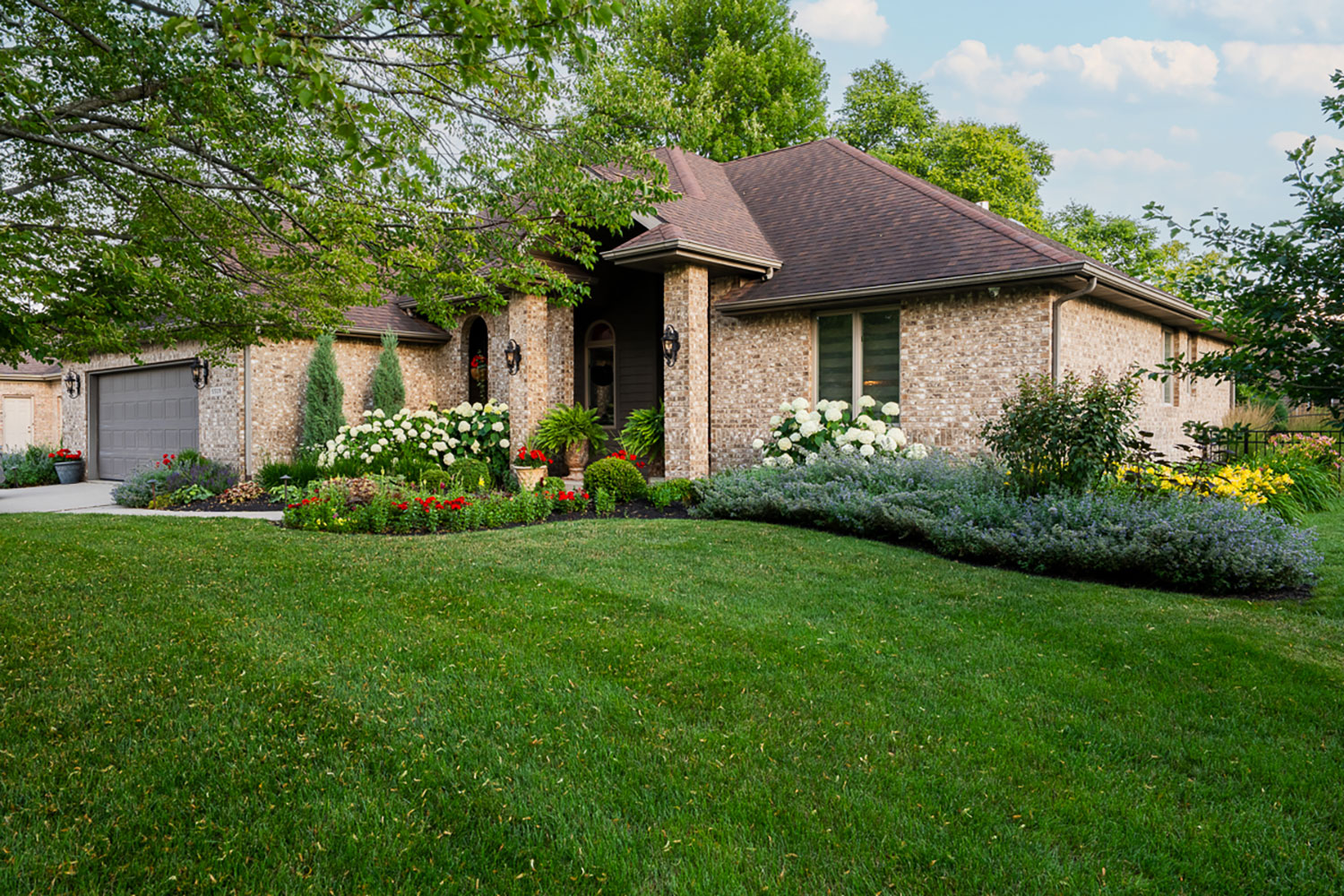
Hardscape is the second installation category and the second engineering problem. The number of freeze-thaw cycles a paver patio experiences each year in East Central Indiana is closer to forty than ten. National spec sheets written for milder climates undersize the base. A four-inch base of dense-graded aggregate that holds in Kentucky moves in Muncie after two winters. We install to a six-to-eight-inch compacted base on residential patios and an eight-to-twelve-inch base on driveable surfaces, with a geotextile separator above the subgrade and a polymeric joint sand chosen for cold-cycle durability rather than warm-climate appearance.
Drainage is engineered into the base, not relied on to find its own way out. Where the patio sits against a foundation, the base layer pitches a quarter inch per foot away from the house and ties into the property drainage plan rather than the planting beds. When the project includes regrade or French drain work, we cross-coordinate with the install sequence so the hardscape base goes in over corrected subgrade, not over the original problem. See drainage and grading for the underlying water work that pairs with most hardscape installs on Muncie-area lots.
The Year-One Failure Modes We Engineer Against
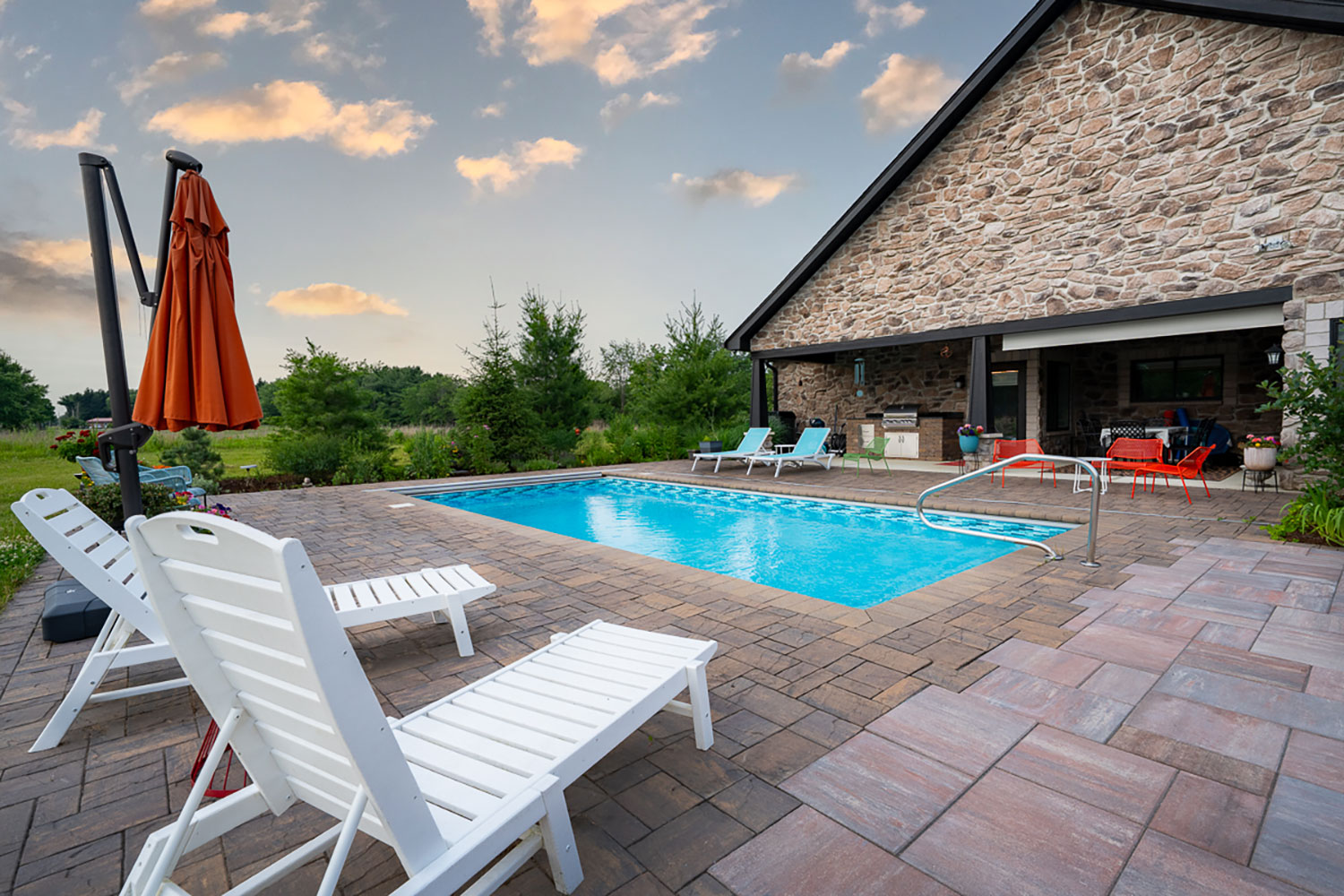
A few failure patterns recur on landscape installs across the region. We engineer against each one explicitly. The first is root flare burial on newly planted trees, which kills the tree slowly over years three through six and tends to be diagnosed as the tree just not having taken. Our installs photograph the root flare against grade at every tree before backfill, and the photograph goes into the project record.
The second is base undersizing on hardscape, which produces the first heave at year two and the first joint failure at year three. Our base depths and aggregate gradations are set per use, not per a default contractor template. Drainage tie-ins on the base layer are specified before the surface ever lands.
The third is the irrigation handoff that nobody reads. New plantings need a watering schedule that ramps from deep daily soaks in week one to deep weekly soaks by month three. A homeowner who waters on the existing turf schedule will overwater the plantings or underwater them depending on which way the schedule errs. We hand off the schedule, walk it through on the final walk, and follow up at the thirty-day mark to look at root establishment and adjust.
Engineering the install this way is what makes the rest of the property work. Designed beds need installed beds. A property that finishes well at handoff and still finishes well at year three is the test we install to.
Frequently Asked Questions
What does landscape installation include?
Landscape installation is the build phase: putting in trees, shrubs, perennials, sod, structural plantings, drainage tile, grading, and hardscape according to the plan. At Plant Studio Landscape the installation is done by the same crew that helped build the plan, whether it is a full design-build project or a stand-alone install of a plan from elsewhere. Installation covers both softscape, the living plant material, and the grading and base work that makes it last in the Indiana climate.
Can you install a landscape plan that another company or I designed?
Yes. Stand-alone installation is part of what Plant Studio does. If you have a plan from another designer or have drawn one yourself, the crew can read it and build it, bringing the construction knowledge that turns a drawing into a finished landscape. The crew will also flag anything in the plan that will not perform in East Central Indiana conditions, such as plant choices outside the local hardiness zone or grading that will not drain, before it becomes a problem in the ground.
What is the best time of year for landscape installation in Indiana?
Spring and fall are the prime windows for planting installation in East Central Indiana, giving roots time to establish in moderate temperatures. Hardscape and structural installation can happen across most of the year, weather permitting, since the heavy work is less dependent on the growing season. Frozen ground and deep winter limit planting and excavation. The plan and the season are matched during scheduling so each part of the install goes in at the right time.
How long does a landscape installation take?
It depends entirely on scope, from a single bed or planting completed in a day or two, to a full-property install of hardscape, planting, drainage, and lighting that runs weeks and is sequenced with the heavy structural work first. Weather and access also factor in. Because Plant Studio installs with its own crews, you get one schedule, weekly updates on progress, and one point of contact rather than coordinating separate trades yourself.
Why does professional installation matter more than the plants themselves?
Because most landscape failures are installation failures, not plant failures. Trees planted too deep, beds with no drainage, sod laid on unprepared soil, and hardscape on a shallow base all fail regardless of the quality of the materials. Correct installation, proper planting depth, soil preparation, drainage, and base work, is what lets a landscape establish and last through Indiana freeze and thaw. The crew that built the plan knows why each detail is on the drawing, which is the value of installation by the same team.
Schedule an Installation Conversation
Because how a yard gets built matters, the install crew has to be the people who care about plant establishment, hardscape base depth, and the watering plan as much as they care about the surfaces a homeowner sees on handoff day. Call (765) 717-3917 or request a quote and we will walk your property, dig a test pit if the situation warrants one, and tell you what the install would actually need to hold up through year three. There is no charge for the walk and no obligation after it.