
Inground Pool Design and Installation in Muncie, Indiana
A pool is one of the bigger decisions a homeowner in East Central Indiana makes about a property, and almost all of the work that decides whether the pool succeeds happens before the dig. The pool you remember from the postcard view is not the project. The project is the yard the pool sits inside, the months the pool is covered, the way the family actually uses the back of the property when it is not July.
Because summer at home matters, the design has to earn the cost across the rest of the year too. A back yard built around a pool well is a back yard that still reads as a back yard in February.
I am Josh Perkins, Landscape Architect, and I lead the pool design work at Plant Studio Landscape’s Muncie pool design team. The sections below are how I think about pool projects on Indiana properties, what I will and will not recommend, and what a pool actually costs in years and dollars, not in build-week pricing alone.
What Most Homeowners Get Wrong About Putting In a Pool in Indiana
The first conversation about a pool is almost always sized wrong. A homeowner has been thinking about the pool for two summers, has a rectangle in mind, has a depth in mind, has maybe a vinyl-versus-fiberglass preference in mind, and the budget conversation has been with the spouse, not with anyone who installs pools.
The second conversation, the one we end up having, is about what the pool sits in. The deck. The grading. The drainage off the deck during a heavy August storm. The shade that will or will not fall over the water in late afternoon. The line of sight from the kitchen window. The privacy from the neighbor on the east. How the dog gets back into the house wet. Where the equipment pad goes and how loud it is from where you sit. None of those were in the conversation the homeowner had been having with themselves. All of them are what makes the pool a property feature instead of a hole in the yard with water in it.
In Indiana that second conversation is heavier than in warmer states. The pool here is closed five months a year. The yard around it has to keep being a yard during those months, not a perimeter around a covered hole. The properties where the pool succeeds are properties where the yard was designed as a whole and the pool sits inside it. The properties where the pool struggles are properties where the pool went in first and the yard got patched around it.
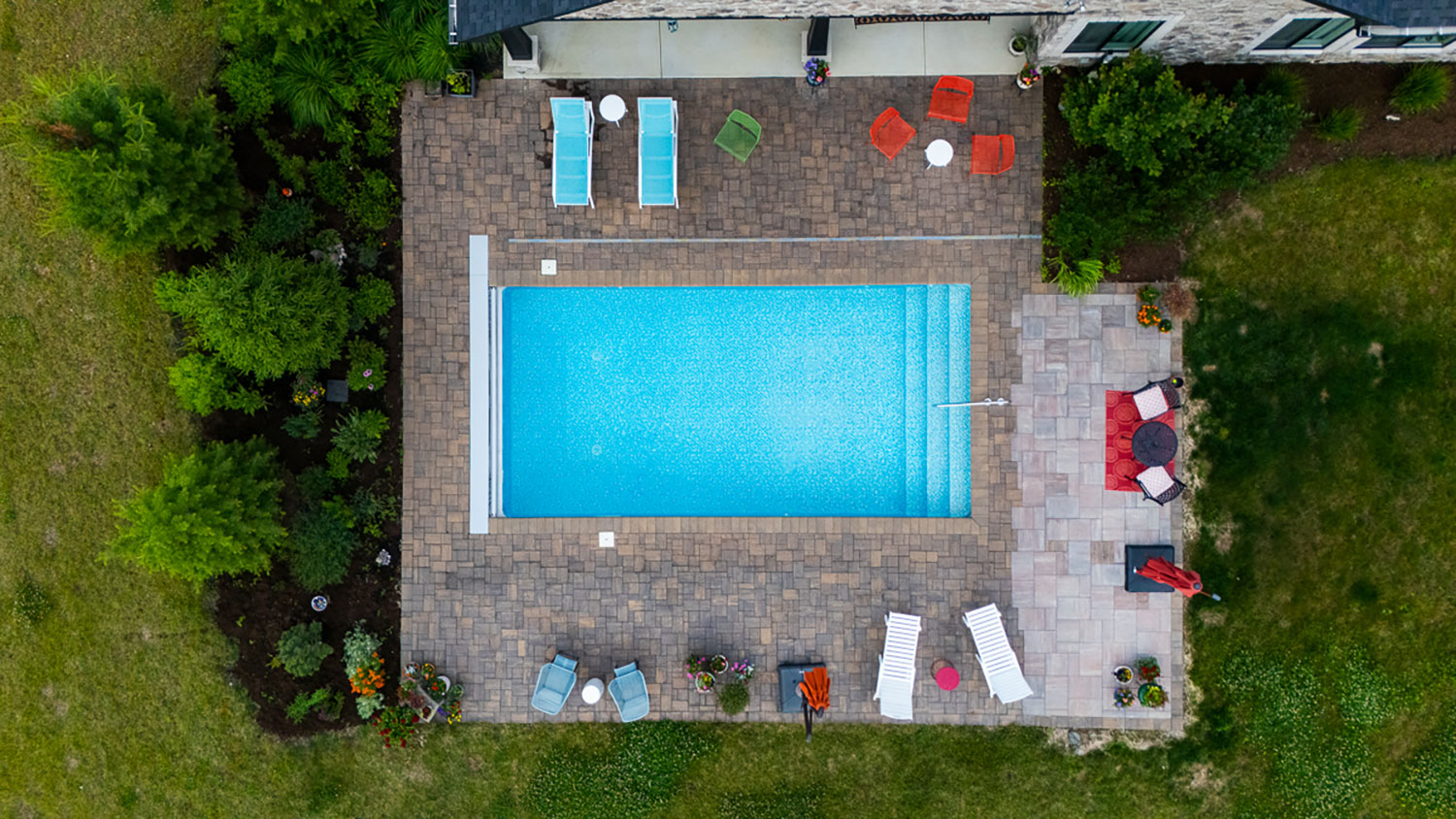
What I Look For Before I Will Recommend a Pool At All
There are properties I walk where my honest first read is that a pool is not the right project. I will say so before we are deep enough into the design that the conversation is hard to back out of.
I look at the lot first. A pool needs flat enough ground to set the shell and enough surrounding deck space to make the pool usable. Steeply graded back yards force a deck that costs more than the pool. Tight subdivisions where the only space behind the house is twenty-five feet to a fence are space-constrained in a way that turns a standard pool layout into a hot tub.
I look at the trees. A back yard that is shaded for most of the day by mature oaks will be a yard with a cold pool half the season and leaf debris in the skimmer the other half. I would rather tell a homeowner that than design a pool that disappoints them every October.
I look at where the family actually is. Some homeowners think they want a pool and what they actually want is the back-yard time the pool is supposed to enable. A patio with a fire feature and a usable lawn does that work cheaper, with less liability, and with maintenance the family will actually keep up with. If that is the project, that is the project I will recommend.
And I look at the maintenance willingness. A pool a family has time for is a pool that gets used. A pool a family does not have time for is a pool that becomes a green liability by year three. I would rather a homeowner walk into the project knowing that than walk out of it surprised.

What a Pool Project Actually Costs in Years and Dollars
A pool project on an Indiana property has three cost windows a homeowner should understand before signing anything.
Year one is the build. The shell, the equipment, the deck, the grading and drainage around the pool, and the planting framework that ties the pool into the rest of the yard. The build cost is the number most homeowners have in mind. It is usually the smallest of the three.
Years two through five are the integration. The original plant material around the pool grows in or fails. The deck settles in spots and may need to be sealed or rejointed. The equipment pad gets some weatherproof planting that nobody thought about in year one. The neighbor’s tree drops something the deck did not account for. The integration cost is small per year but real, and it is where the property’s whole-design quality becomes visible.
Years five through fifteen are the ownership cost. The liner gets replaced on a vinyl pool. The cover gets replaced on the schedule it was supposed to be replaced. The pump and heater age out and become a year’s worth of repair calls. The deck around the pool needs the same kind of maintenance any hardscape needs. If the pool was designed to make these decisions easy and predictable, the ownership cost is fine. If it was not, the ownership cost is what makes the homeowner regret the pool.
I walk homeowners through these three windows in the first design conversation. The decision to put a pool in should be made knowing all three, not knowing only the first.
How I Design the Yard Around the Pool, Not the Pool Around the Yard
A pool design we deliver is not a pool plan with grass around it. It is a property plan with the pool sitting inside it.
The deck around the pool gets drawn at the same elevation and material logic as the rest of the property’s hardscape, so it reads as one project. The planting around the pool is chosen to handle pool-side conditions like splash and chlorine while still belonging to the same plant framework as the rest of the back yard. The lighting carries the same fixture family from the front of the property through to the pool perimeter. The grade off the deck goes somewhere intentional, not into the lowest neighboring bed.
The pool also connects to the rest of the outdoor living program. If a back-yard plan includes a luxury patio or covered seating area, the pool design and the patio design get drawn together, not in sequence. If there is going to be an outdoor living space with a kitchen or a fire feature, the pool plan accounts for sight lines and night-use patterns from the start. This is where most stand-alone pool projects, designed by pool-only crews, miss the chance to be something more than a pool.

Frequently Asked Questions
What types of inground pools do you install?
Plant Studio Landscape installs fiberglass and vinyl liner inground pools. Fiberglass pools arrive as a molded shell, install on a shorter schedule, and carry a smooth, low-maintenance surface that holds up well over a long ownership. Vinyl liner pools have a lower up-front cost and a smooth finish with liners replaced over time. The right choice depends on budget, design goals, and how the pool fits the property. In every case the pool is designed into the broader landscape rather than dropped in on its own.
Should the pool and the surrounding landscape be designed together?
Yes, and this is a core difference in how Plant Studio approaches pools. Pool placement, depth, decking, screening, lighting, and planting are all decided alongside the rest of the property so the finished yard reads as one piece of work, not a pool with leftover space around it. When the hardscape and landscape are handled as a follow-up the next year, the result usually looks bolted on. Designing it all at once, with one team, is what makes a pool feel like it always belonged there.
How long does it take to build an inground pool?
An inground pool is a multi-week to multi-month project depending on type, weather, and the scope of the surrounding hardscape and landscape. Excavation, the shell, plumbing, decking, and finishing each take time and have to sequence correctly, and East Central Indiana weather affects the schedule. Because Plant Studio builds the pool and the surrounding landscape with coordinated crews, you get one schedule and weekly updates rather than juggling a pool company and a separate landscaper.
Can a pool be installed on a sloped or difficult lot?
Often yes, though a slope adds engineering. A sloped lot may need retaining walls, grading, and careful drainage design to create a level pool area and keep water moving correctly, all of which a licensed landscape architect can design as an integrated plan. Access for equipment and soil conditions also factor in. The site walk is where the feasibility, the grading approach, and the cost implications of a challenging lot get assessed honestly before any commitment.
How much does an inground pool cost in the Muncie area?
Cost varies widely with type, size, and the surrounding hardscape, decking, and landscape, with fiberglass and vinyl liner each carrying a different up-front and long-term cost profile, and a full outdoor living build around the pool adding to the total. Because the pool is designed as part of the whole property, the honest number comes from a site walk and a written proposal covering the pool and everything around it. You see the full scope and price before any work begins, from one team that owns the entire result.
Schedule a Pool Design Walk
We picture a world where a back yard with a pool in it reads as one designed property in July and as one designed property in February, not as a covered hole eight months a year. A first walk does not cost anything and does not commit you to a build. We walk the property together, talk through whether a pool is the right project for it, and tell you what the project would actually look like and cost across the three windows. Call (765) 717-3917 or request a quote.