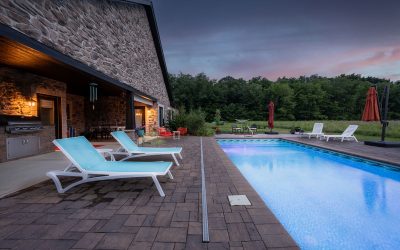
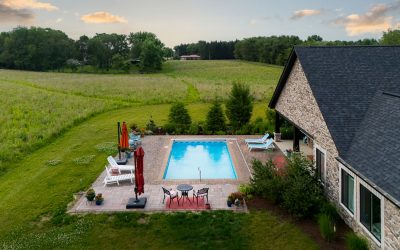
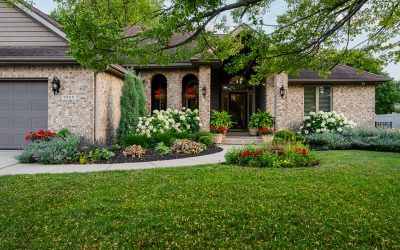
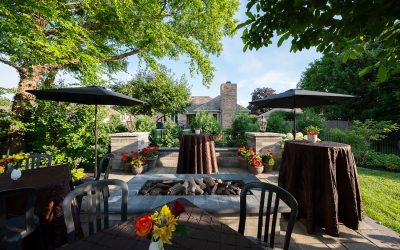
Paver patios outperform poured concrete patios in Muncie’s freeze-thaw climate due to their flexibility and repairability. The interlocking structure of pavers allows individual units to shift with ground movement during freeze-thaw cycles, preventing the cracking that commonly affects solid concrete slabs. In East Central Indiana, where clay soil and freezing temperatures challenge hardscape durability, this distinction significantly impacts long-term performance.
Plant Studio Landscape serves residential and commercial properties across Muncie, Yorktown, Albany, Eaton, Daleville, Anderson, and New Castle. The company offers hardscaping, patio installation, and outdoor living space design under one coordinated service model. For an introduction to the full range of services, see the landscaper in Muncie, Indiana pillar page and the hardscaping subpillar.
Led by owner and landscape architect Josh Perkins, Plant Studio Landscape designs and installs patios engineered specifically for East Central Indiana’s challenging conditions. Soil, drainage, base preparation, and material selection are considered together so patios remain level, functional, and attractive through Muncie’s four-season climate.
Table of Contents
This guide compares paver and concrete patios to help Muncie property owners make an informed material choice.
Key Takeaways
Choosing between paver and concrete patios affects durability, maintenance, and long-term value for Muncie properties.
- Paver patios offer superior durability in freeze-thaw climates because interlocking units flex with ground movement instead of cracking.
- Concrete patios have lower upfront costs but higher long-term repair expenses when cracks develop from settling or frost heave.
- Paver patios provide greater design flexibility with hundreds of colors, shapes, and pattern options for custom outdoor living spaces.
- Concrete patios require sealing every 2 to 3 years to protect against moisture and staining in Muncie’s climate.
- Plant Studio Landscape installs patios engineered for East Central Indiana’s clay soil and freeze-thaw conditions.
Paver Patio vs Concrete Patio: An Overview for Muncie Homeowners
A paver patio is built from interlocking individual units, while a concrete patio is a single poured slab. This fundamental difference affects durability, maintenance, repair options, and performance in Muncie’s climate. Each material has advantages and trade-offs that make it suitable for different project goals, budgets, and site conditions.
Both options can create beautiful, functional outdoor living spaces. Pavers are installed over a prepared base of compacted gravel and sand, with each unit placed by hand and joints filled with sand or polymeric material. Concrete is poured as a continuous surface, finished with texture or color, and allowed to cure as a single slab [citation:6].
| Feature | Paver Patio | Concrete Patio |
|---|---|---|
| Construction | Individual units on compacted base | Single poured slab |
| Typical Lifespan | 30 to 50+ years [citation:1] | 20 to 30 years [citation:1] |
| Freeze-Thaw Performance | Flexes with ground movement, resists cracking [citation:4] | Prone to cracking from frost heave [citation:1] |
| Design Options | Hundreds of colors, shapes, patterns [citation:6] | Stamped, stained, or colored |
| Repair | Individual unit replacement [citation:5] | Visible patches or resurfacing required |
Durability and Lifespan: Which Patio Lasts Longer in Muncie?
Paver patios typically last 30 to 50 years or more, while concrete patios average 20 to 30 years. This lifespan difference reflects how each material responds to ground movement, freeze-thaw cycles, and ongoing wear. In Muncie’s climate, where clay soil expands and contracts and temperatures fluctuate below freezing, durability becomes particularly important [citation:1].
The interlocking system of paver patios provides a significant advantage in freeze-thaw climates. Individual pavers can shift slightly with ground movement without cracking, and the flexible base absorbs stress from soil expansion. This design feature is especially valuable in Delaware County, where clay soil movement can exert pressure on hardscape surfaces [citation:4].
Concrete patios, in contrast, are single continuous slabs. When soil beneath the slab shifts or freezes, the concrete lacks flexibility and develops cracks. The Interlocking Concrete Pavement Institute notes that properly installed paver systems are designed to handle environmental stress like freeze-thaw cycles while maintaining structural integrity [citation:5]. While concrete can last for decades with proper care, cracking remains its most common and visible problem [citation:1].
Repair and Maintenance Differences
Paver patios offer easier, less visible repairs through individual unit replacement, while concrete repairs often remain noticeable. When a paver cracks or becomes damaged, a contractor can remove the affected unit and replace it without disturbing the surrounding patio [citation:6]. This localized repair keeps the patio looking consistent and avoids the cost of full replacement.
Concrete repairs are more challenging to perform without affecting appearance. Cracks can be filled or patched, but matching the original color, texture, and finish is difficult. Large cracks may require resurfacing or partial replacement, which can be costly and still result in visible seams. In regions with freeze-thaw cycles, cracks often develop within 5 to 10 years of installation, compounding maintenance needs [citation:1].
Both materials require routine maintenance. Concrete needs sealing every 2 to 3 years to protect against moisture and staining. Paver patios require occasional sweeping, re-sanding of joints, and sealing every few years to prevent weed growth and fading [citation:1].
Design and Aesthetics: Comparing Visual Options
Paver patios provide more design flexibility with hundreds of colors, shapes, and pattern options. Pavers are available in concrete, brick, and natural stone materials, each offering distinct aesthetics. Homeowners can choose from layouts such as herringbone, basket weave, circular designs, and custom borders to match their home’s architecture and landscaping style [citation:5][citation:6].
Concrete patios offer fewer but still meaningful design options. Poured concrete can be stamped, stained, or colored to mimic natural stone, brick, or tile patterns. Stamped concrete can create a clean, modern look with a continuous surface and fewer seams. However, design choices are more limited once the concrete is poured, and color fading or surface wear may occur over time, especially in direct sun [citation:2].
For homeowners who want a unique, custom outdoor space, pavers generally provide more creative possibilities. The variety of shapes, sizes, and colors allows for intricate patterns that define seating areas, pathways, and gathering spaces [citation:4]. Concrete works well for homeowners who prefer a simpler, more uniform appearance with a clean aesthetic [citation:3].
Cost Comparison: Upfront Investment and Long-Term Value
Concrete patios generally cost less upfront, with installation typically ranging from $6 to $12 per square foot. Paver patios typically cost between $10 and $25 per square foot, depending on the material and pattern complexity [citation:1][citation:4]. This initial cost difference makes concrete appear more budget-friendly at the time of installation.
However, long-term costs often favor pavers. Concrete’s shorter lifespan and higher repair costs can offset its lower upfront price. Large cracks may require resurfacing or partial replacement, which can be expensive and often cannot restore the original appearance. Individual paver repairs are typically less costly and less noticeable, making pavers more economical over a 30-year period [citation:1][citation:4].
Climate Considerations: How Muncie Weather Affects Patio Performance
Muncie’s freeze-thaw cycles make paver patios a more durable choice than concrete for outdoor living spaces. The USDA designates Delaware County within hardiness zone 6a, with average annual minimum temperatures ranging from -10 to -5 degrees Fahrenheit. These conditions cause the ground to freeze and thaw repeatedly, creating movement that challenges hardscape surfaces [citation:4].
Pavers perform better in freeze-thaw climates because they can flex with ground movement. The interlocking design and flexible base absorb the pressure from freezing and thawing soil without cracking. This is especially important in Muncie, where clay soil expands when wet and contracts when dry, causing more ground movement than sandy or well-draining soils [citation:5].
Concrete patios lack this flexibility and are more likely to develop cracks from frost heaving. Homeowners in East Central Indiana who choose concrete should expect cracks to develop over time, even with proper sealing and maintenance [citation:1]. Proper installation with adequate base preparation, control joints, and drainage can help, but it cannot eliminate the risk entirely [citation:3].
Clay Soil and Drainage Considerations
Clay soil in Muncie expands and contracts with moisture changes, creating movement that affects patio durability. The Natural Resources Conservation Service classifies several soil series in the Muncie area, including Crosby, Miami, and Brookston soils, all of which exhibit slow permeability and high shrink-swell potential. This means the ground beneath a patio moves more than in other soil types [citation:4].
Proper base preparation and drainage are essential for both materials. For paver patios, a compacted gravel base with adequate depth and drainage layers helps distribute weight and prevent settling. For concrete, control joints and proper subgrade preparation help minimize cracking. In Muncie’s climate, professional installation with attention to these details is critical for long-term performance [citation:2][citation:3].
Frequently Asked Questions About Patio Materials
Muncie property owners ask practical questions about paver and concrete patios, costs, and installation.
Is a paver patio better than concrete in cold climates?
Paver patios are generally better in cold climates because they flex with ground movement and resist cracking from freeze-thaw cycles. Concrete patios are more rigid and prone to cracking when the ground freezes and thaws [citation:1][citation:4].
How much does a paver patio cost in Muncie?
Paver patio installation in Muncie typically costs between $10 and $25 per square foot, depending on material selection, design complexity, and site conditions. Premium materials and intricate patterns cost more [citation:1][citation:4]. Project-specific estimates are necessary. Contact a professional like Plant Studio Landscape for a consultation.
Figures are for educational and research purposes only and do not reflect Plant Studio Landscape’s pricing. Consult the company directly for project-specific estimates.
How long does a concrete patio last?
A concrete patio typically lasts 20 to 30 years with proper care, but cracks often develop within 5 to 10 years in freeze-thaw climates. Cracks may be visible and can require repairs or resurfacing [citation:1].
Can you repair a cracked concrete patio?
Cracked concrete can be repaired, but repairs are often visible and may not fully restore the patio’s appearance. Patching, resurfacing, or partial replacement may be required. Individual paver replacement is typically less costly and less noticeable [citation:2][citation:5].
What maintenance do paver patios require?
Paver patios require occasional sweeping, re-sanding of joints, and sealing every few years to prevent weed growth and fading. Damaged pavers can be replaced individually, keeping maintenance costs low [citation:1].
People Also Ask
Google users connect paver and concrete patios with outdoor living spaces, durability, and installation costs in Muncie.
What material is best for a patio in Indiana?
Concrete pavers are often recommended for Indiana patios due to their durability, resistance to freeze-thaw cycles, and ease of repair. Natural stone is also a strong choice for its durability and unique aesthetic [citation:1][citation:4].
Does a paver patio add value to a home?
A well-installed paver patio typically adds value to a home by creating usable outdoor living space and improving curb appeal. The high-end appearance and durability often appeal to buyers [citation:5].
What causes concrete patios to crack?
Concrete patios crack from soil settlement, freeze-thaw cycles, poor drainage, and inadequate base preparation. Clay soil expansion and contraction common in Muncie accelerates cracking [citation:1][citation:3].
Can you install a patio over existing concrete?
Installing a new patio over existing concrete is possible but requires careful assessment of the existing surface’s condition and proper preparation. Pavers can sometimes be installed over concrete, but drainage and height transitions must be addressed [citation:2].
How do I choose a patio contractor?
Choose a patio contractor by evaluating experience, credentials, portfolio, and knowledge of local soil and climate conditions. A landscape architect-led firm like Plant Studio Landscape provides integrated design and construction expertise [citation:5].
Related Patio and Hardscape Topics
Muncie property owners connect patio materials with hardscaping, outdoor living, and patio installation. These related topics represent common paths from early research to a defined project.
- paver patio installation Muncie IN
- stamped concrete vs pavers Indiana
- outdoor living space design East Central Indiana
- hardscape contractor Delaware County
- patio drainage solutions Muncie
About Josh Perkins – Landscape Architect
Josh Perkins leads Plant Studio Landscape as its owner and landscape architect. A Ball State University landscape architecture graduate, Perkins established the company in 2016 and has built a team serving residential and commercial properties across East Central Indiana.
His landscape-architect-led approach connects patio design, site planning, drainage, base preparation, and long-term maintenance. That integrated perspective ensures patios are engineered for Muncie’s clay soil and freeze-thaw cycles. Outdoor living space design is a key area where this integrated approach is particularly valuable.
Josh Perkins connects design decisions with construction and long-term landscape performance. Property owners can begin by discussing the site, the way the space should function, existing drainage or grade concerns, and the level of ongoing care the finished patio will need.
Sources
Authoritative sources support the article’s claims about patio materials, durability, and professional installation practices.
- Interlocking Concrete Pavement Institute (ICPI). icpi.org
- USDA Natural Resources Conservation Service. “Web Soil Survey – Delaware County, Indiana.” nrcs.usda.gov
- Purdue Extension. “Soil and Site Preparation for Residential Landscapes.” extension.purdue.edu
Choosing the Right Patio for Your Muncie Property
Paver patios offer superior durability and long-term value for Muncie properties due to their flexibility and repairability in freeze-thaw conditions. Concrete patios provide a lower upfront cost but carry higher long-term repair expenses. For homeowners planning outdoor living spaces in East Central Indiana, consulting a landscape architect-led firm ensures proper site analysis, drainage planning, and base preparation.
Plant Studio Landscape designs and installs patios engineered specifically for Delaware County’s clay soil and climate. The design-build-maintain model offers a streamlined path from concept to completion, with ongoing care that protects the investment for years to come.
Last reviewed: August 2026